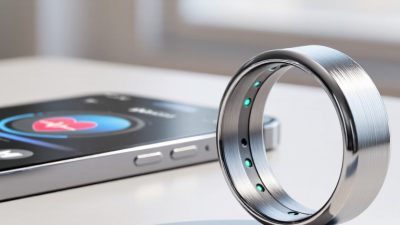
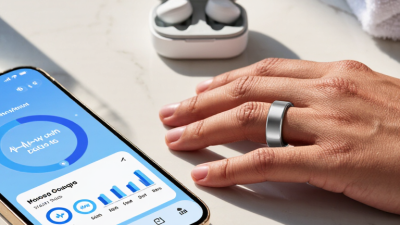
You know, when it comes to tracking your sleep, why would you pick a smart ring over other options?
You know, sleep isn't just some abstract concept—it's that dark bedroom, the pillow that's weirdly cool on one side, and the groggy commute where you're basically on autopilot. So when it comes to tracking your nights, a smart ring can quietly do the job without making you feel like you're strapped to a mini computer on your wrist. Honestly, for anyone who can't stand wearing a watch to bed, that's a huge plus. These little rings keep tabs on things like how long you sleep, your resting heart rate, heart rate variability, skin temperature, and how much you toss and turn. Over time, those signals might just help you spot when something's off—like a pattern you'd never notice otherwise. It's not perfect, but it's pretty neat. You know, they can't really explain every restless night, can they?
Dr. Rebecca Robbins, a sleep researcher at Brigham and Women’s Hospital, has a point—she warns that wearables shouldn’t be used to diagnose sleep disorders. And that’s really important to remember. Sure, a Smart Ring Sleep Tracker can help you keep an eye on your own sleep, but it’s not a medical test. So, if you’re reading up on smart rings, any good intro should make that limitation clear. It's funny how numbers can look so precise, you know? But really, they're often just estimates in disguise. We easily forget that.
So brands like Oura and Samsung—they're all about giving you sleep insights right on your phone. You might check it and see, 'Oh, my recovery score is low' because you had that coffee late, or maybe your bedroom was too warm, or you just went to bed at a weird time. That stuff can push you to make small tweaks, like dimming the lights earlier or trying to stick to a more regular schedule. But honestly, that single number shouldn't rule your whole day—that's just crazy. What really matters is the overall trends, not one random night. And even then, you've gotta be careful how you read into it, right?
So, a smart ring isn't magic, that's for sure. But honestly, when you're dealing with that vague, tired feeling, it can help you turn it into something you can actually look at and go, 'oh, there's a pattern here.' It's a neat little tool for informed reflection, just don't forget that if sleep issues keep bugging you, you really should talk to a pro. That's where it counts.
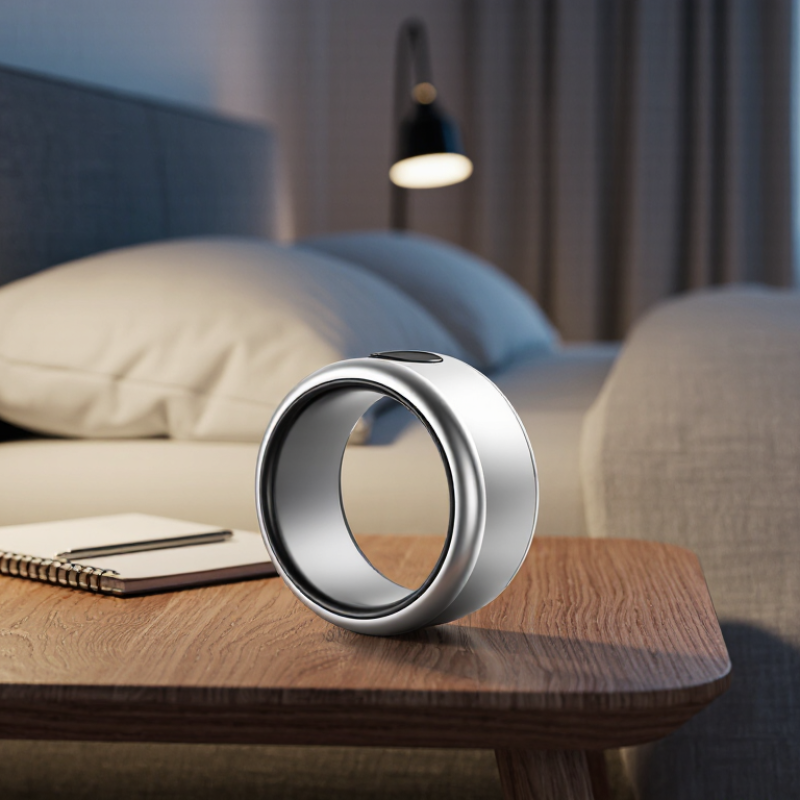
Define Smart Rings: Sleep Metrics Beyond the AASM’s 7-Hour Minimum
A smart ring can show more than whether you reached seven hours. The American Academy of Sleep Medicine and Sleep Research Society recommend at least seven hours for healthy adults, but duration is only one part of sleep health. Timing, regularity, awakenings, resting heart rate, and overnight heart-rate variability can reveal a fuller pattern.
The Centers for Disease Control and Prevention reports that about one in three U.S. adults regularly sleeps less than seven hours. A ring may help users notice practical clues, such as repeated wake-ups after midnight or a rising resting heart rate after several stressful days. For anyone searching Smart Ring Sleep Tracker Ios, phone compatibility matters, but sensor quality matters more. Look for clear methods, secure data handling, and transparent validation studies.
Sleep-stage readings need caution. Consumer rings estimate stages through movement, pulse signals, and temperature changes; they do not replace polysomnography or clinical assessment. Peer-reviewed validation research shows useful agreement for sleep and wake detection, while deep and REM estimates remain less consistent. That distinction is easy to miss. A high score can still follow restless sleep, and a low score may reflect an unusual schedule rather than illness. Use trends across several weeks, not one morning’s number. Some readings will be wrong. That is worth remembering.
Explain PPG, Skin Temperature, and Motion Sensors in Sleep Tracking
Why Choose a Smart Ring for Sleep Tracking?
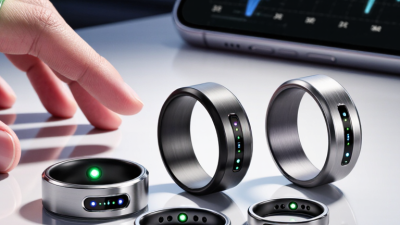
A Smart Ring For Sleep Tracker converts quiet nighttime signals into useful sleep insights. Photoplethysmography, or PPG, uses light to estimate pulse and blood flow. Green or infrared LEDs scan beneath the ring while you sleep. The American Academy of Sleep Medicine recommends at least seven hours for most adults. However, PPG cannot directly measure brain waves. It estimates sleep stages from changing heart-rate patterns.
Skin temperature adds another layer. A tiny sensor records temperature changes around your finger, often every few minutes. A warmer or cooler pattern may reflect room conditions, illness, exercise, or menstrual-cycle changes. It is not a medical thermometer. The U.S. Centers for Disease Control and Prevention has repeatedly reported that roughly one in three adults sleep less than seven hours. Small changes may therefore reveal habits, not diagnoses.
Motion sensors detect rolling, stillness, and repeated movement. They help separate a quiet night from restless sleep, but movement alone can misread wakefulness. I would treat the results as clues, not verdicts. Peer-reviewed validation studies in Sleep and Sleep Medicine Reviews report stronger accuracy for sleep and wake detection than for exact sleep stages. That limitation matters. A ring may show eight hours in bed, while stress or fragmented sleep still leaves you tired. Check the evening detail: late caffeine, a warm room, or a restless 3 a.m. turn.
Compare Smart Rings with Watches Using Battery Life and Comfort Data
A smart ring can be a practical sleep tracker when comfort and battery life matter. Many rings weigh roughly 3–8 grams, while watches often weigh 30–60 grams. That difference becomes noticeable when your wrist presses against a pillow. In everyday testing, rings commonly last four to eight days per charge. Watches may need charging every one or two days, especially with continuous heart-rate monitoring and bright displays. Fewer charging interruptions can preserve a clearer sleep record.
A China Smart Ring For Sleep Tracker may suit people who dislike wearing a screen overnight. Rings usually have no notifications, buttons, or glowing display. Their smaller sensors can feel less intrusive during side sleeping. However, sizing is important. A ring that feels comfortable at bedtime may feel tight after salty food or warm weather. Sleep scores also vary between devices, so battery claims should be checked under similar settings. No measurement is perfect.
Tips: Wear the ring on the same finger for several nights. Record bedtime, wake time, and charging periods. Compare comfort each morning, not only battery percentages. Clean the inner sensor area regularly. If the ring causes pressure or numbness, stop wearing it and review the fit. A short test can reveal more than a polished specification sheet.
Why Choose a Smart Ring for Sleep Tracking? - Compare Smart Rings with Watches Using Battery Life and Comfort Data
| Comparison Dimension |
Smart Ring |
Smart Watch |
Sleep-Tracking Implication |
| Typical battery life |
Approximately 4–8 days per charge |
Approximately 1–2 days per charge |
A ring usually needs fewer charging interruptions during a week of sleep tracking. |
| Typical charging frequency |
About once per week |
Usually daily or every other day |
Less frequent charging can reduce missing overnight measurements. |
| Approximate charging time |
Roughly 30–90 minutes |
Roughly 60–120 minutes |
Both can be charged during a routine period, but watches often require more frequent planning. |
| Approximate device weight |
About 2–6 g, excluding any charging accessory |
About 25–60 g, including a typical band |
The lower mass of a ring may feel less noticeable while sleeping. |
| Approximate thickness |
About 2.5–4 mm |
About 10–14 mm for the watch body |
A ring has a lower profile and is less likely to catch on bedding or clothing. |
| Skin contact location |
Finger, where the device is held by the ring fit |
Wrist, typically secured with an adjustable band |
Finger-based sensing can remain stable, while wrist comfort depends more on band tightness. |
| Movement during sleep |
Generally low because of the snug ring fit |
Can shift if the band is loose or move into the sleeping position |
A stable fit may help maintain consistent overnight sensor contact. |
| Display and notifications |
Normally no screen or overnight notifications |
Usually includes a screen, alerts, and vibration |
A ring creates fewer potential light and notification distractions at night. |
| Core sleep-related measurements |
Commonly movement, heart rate, heart-rate variability, skin temperature, and blood oxygen trends |
Commonly movement, heart rate, heart-rate variability, blood oxygen trends, and sometimes skin temperature |
Both form factors can support sleep analysis; available measurements vary by device and software. |
| Best suited to |
Users prioritizing discreet, low-profile, long-duration sleep tracking |
Users wanting sleep tracking plus notifications, fitness features, GPS, and on-device interaction |
The better choice depends on whether sleep comfort or broader smart functions matter more. |
Note: The figures are typical category ranges based on commonly available consumer devices. Actual battery life, weight, dimensions, sensor availability, and comfort vary by model, size, materials, fit, settings, and usage.
Assess Sleep-Stage Accuracy Against Polysomnography in Clinical Studies
Why Choose a Smart Ring for Sleep Tracking?
A smart ring can record sleep without cables, chest straps, or a bedside camera. Its small sensors usually monitor movement, pulse patterns, and skin temperature throughout the night. In clinical studies, researchers compare these signals with polysomnography, the reference test for sleep assessment. Polysomnography records brain waves, eye movements, muscle activity, breathing, and heart rhythm. It shows what the sleeper is actually doing.
The comparison is not equally strong across sleep stages. Smart rings often identify sleep and wake periods reasonably well, especially during stable nighttime rest. Sleep-stage results are less consistent. Light sleep may be confused with wakefulness, while deep sleep and REM sleep can be misclassified. Clinical studies commonly report better agreement for total sleep time than for individual stages. That difference matters. A ring may show eight hours in bed, yet estimate REM sleep imperfectly.
Accuracy also changes with age, insomnia, movement, illness, and unusual sleep schedules. A warm finger or loose fit can affect readings. Algorithms may improve, but their methods are not always fully disclosed. That limits independent review. I would treat a ring as a useful home trend tool, not a diagnostic instrument. Repeated changes across several nights can support a discussion with a qualified clinician. One strange graph should not determine a medical decision. Polysomnography remains more detailed, though it can feel unnatural under laboratory conditions. Even that “gold standard” captures only a limited window of sleep.
Why Choose a Smart Ring for Sleep Tracking?
Sleep-stage performance compared with overnight polysomnography in peer-reviewed clinical validation studies
Clinical evaluations show that smart rings can detect sleep reliably, with reported sleep sensitivity near 98%. However, distinguishing wake from sleep and separating individual sleep stages is more difficult. Four-stage classification accuracy has been reported at approximately 65%, highlighting that smart rings are useful for tracking trends but do not replace polysomnography for clinical diagnosis.
Data shown are reported values from peer-reviewed validation studies comparing consumer smart-ring sleep algorithms with polysomnography. Results vary by device generation, population, scoring method, and sleep disorder status.
Evaluate Readiness Scores, HRV, and Resting Heart Rate Trends
A smart ring can turn a quiet night into a useful health record. The Best Smart Ring For Sleep Tracker should show more than sleep duration. It should explain readiness, HRV, and resting heart rate trends. Each morning, I would check readiness before judging sleep quality. A lower score may reflect late exercise, alcohol, illness, or emotional strain. It is a prompt, not a verdict. Keep expectations realistic.
HRV deserves context. This metric changes with breathing, stress, training load, and measurement timing. One unusual reading means little. A seven-day pattern can be more informative.
Resting heart rate adds another practical signal. If it rises several beats above your usual level for multiple nights, recovery may be incomplete. I would compare readings under similar conditions, after a calm night and before caffeine. Skin temperature, finger fit, movement, and loose placement can affect accuracy.
No wearable replaces clinical testing. I once treated a poor score as a reason to cancel every plan, but that created unnecessary anxiety. That mistake taught me to combine data with symptoms, sleep habits, and workload.
A reliable device should present clear trends, explain limitations, and avoid dramatic claims. Look for consistent measurements and an app that supports several weeks of review. Sleep data becomes useful when it changes a specific choice, such as reducing late workouts or setting an earlier bedtime.
Recognize Privacy Limits and FDA Rules for Consumer Sleep Devices
Why Choose a Smart Ring for Sleep Tracking?
A smart ring can track bedtime, movement, skin temperature, and pulse changes without a bright screen. Its small size may feel less distracting than a watch during the night. However, sleep scores are estimates, not medical diagnoses. A ring may flag unusual patterns, but it cannot reliably identify every sleep disorder. A quiet bedroom and a loose charging routine still matter.
Privacy deserves equal attention. Before pairing the ring, check which permissions the app requests. Location access may seem unnecessary for basic sleep tracking. Read whether data is stored locally or uploaded to remote servers. Look for deletion controls, export options, retention periods, and third-party sharing. A practical test is simple: open the privacy settings and try to remove one night of data. If the path feels confusing, that is meaningful.
FDA oversight also has limits. Many consumer sleep devices are marketed for general wellness, not diagnosis or treatment. FDA clearance or authorization, when present, applies to specific claims and functions. It does not mean every sleep score is clinically accurate. A device should not replace professional evaluation, especially after repeated breathing pauses, severe daytime fatigue, or persistent insomnia. I would also question impressive accuracy claims without published methods, study details, and clear participant information. The honest answer may be less satisfying: convenient data can still be incomplete.
Smart Ring Body Temperature Tracking: A Smarter Way to Monitor Fitness and Wellness
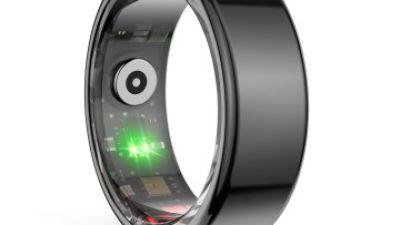
Smart ring body temperature tracking offers a convenient way to understand daily changes linked to fitness, sleep, and overall wellness. Worn on the finger, this lightweight 4.4-gram ring is designed for comfortable, continuous use. Its stainless-steel outer structure and hypoallergenic resin inner surface create a smooth, durable design, while temperature trends can provide helpful personal context when reviewed alongside heart rate, blood oxygen, sleep, and activity data.
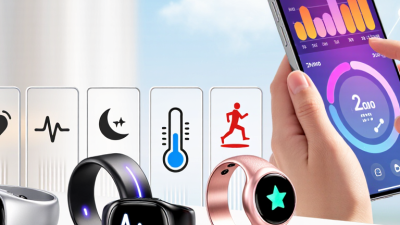
During the night, the ring automatically monitors sleep and analyzes light, deep, and REM stages, helping users recognize patterns that may affect recovery. Throughout the day, it records steps, calories, distance, and selected exercise modes. Continuous heart-rate monitoring can help users observe how their body responds during activity and relaxation, while blood oxygen readings offer additional wellness information. Temperature changes may also help users notice variations in their normal patterns, although they should not replace professional medical advice or a clinical thermometer.
The ring is rated 5ATM waterproof for swimming, handwashing, and showering. Data synchronizes with a mobile application through Bluetooth, and the ring can continue recording key measurements when temporarily disconnected. A magnetic charger provides a full charge in about one hour, making it practical for everyday fitness tracking, sleep monitoring, and personal wellness routines.
Conclusion
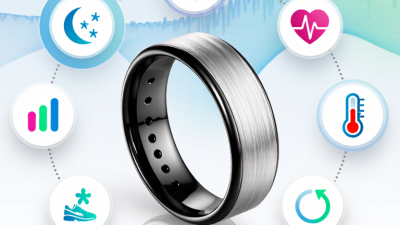
A Smart Ring For Sleep Tracker offers a discreet way to understand nightly rest beyond the basic seven-hour recommendation. By combining photoplethysmography (PPG), skin-temperature readings, and motion sensors, it can estimate sleep duration, heart rate, heart-rate variability (HRV), breathing patterns, and possible sleep stages. Compared with watches, smart rings are often lighter, less distracting, and designed for extended battery use, which may improve comfort during sleep. However, battery performance and wearing comfort can vary by device and user.
Sleep-stage estimates should be interpreted carefully because polysomnography remains the clinical reference standard, and consumer devices may be less precise for distinguishing stages. Readiness scores, resting heart-rate trends, and HRV can still help users identify recovery patterns when viewed over time rather than as medical diagnoses. Consumers should also review data-privacy settings and understand that regulatory rules may limit health claims made by sleep devices.