Leave Your Message
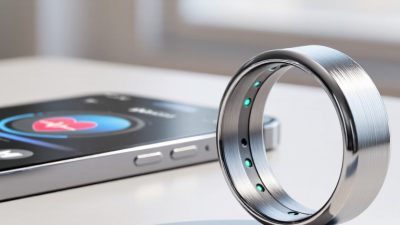
China’s Health Smart Ring market? It’s shifting fast—from niche wellness gadgets to something people wear every day for biometric monitoring. These days, thin titanium bodies can pack in optical sensors, skin-temperature modules, sleep algorithms, and mobile dashboards that keep getting more detailed.
Grand View Research reckons the global smart ring market could grow at a 24.1% compound annual growth rate from 2024 to 2030. MarketsandMarkets also sees strong growth, though it draws the market boundaries differently. And that difference actually matters. Some reports count payment rings; others stick mainly to health tracking. So readers probably shouldn’t treat every forecast as apples-to-apples.
Stanford professor Michael Snyder once said, “Wearables are going to transform medicine.” That idea does highlight the broader value of continuous data. But a ring isn’t a clinical diagnosis. Accuracy still comes down to sensor quality, how well it fits your finger, skin conditions, software, and validation methods. Tiny details matter—especially when you’re asleep.
This guide looks at China’s leading Health Smart Ring suppliers, including Huawei, Xiaomi, RingConn, and other specialized manufacturers. We compare sensor design, battery life, app capabilities, production experience, export readiness, and after-sales support. Supplier claims? They need careful checking. A polished product page isn’t proof of medical reliability.
The phrase Smart Ring Health means more than step counts. It can cover recovery trends, heart-rate patterns, temperature changes, and sleep behavior. Still, privacy deserves just as much attention. Before committing, buyers should ask for test reports, data-processing policies, certifications, and sample units. The ranking may not be perfect—and honestly, that’s exactly why transparent comparison matters.
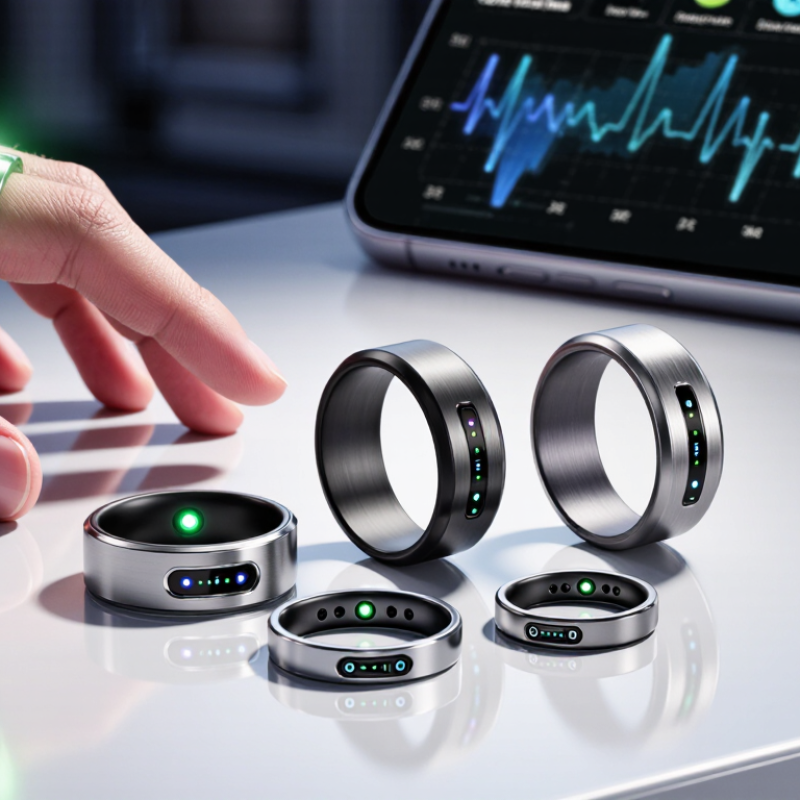
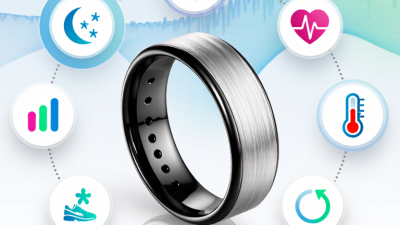
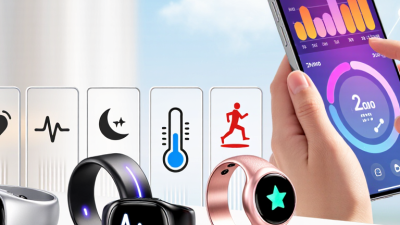
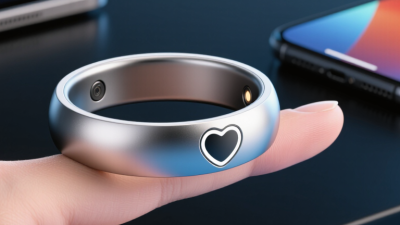
A Smart Health Ring is a small wearable device that tracks selected body signals throughout the day. Tiny sensors can monitor heart rate, skin temperature, sleep patterns, movement, and blood oxygen levels. The ring sends this information to a mobile application, helping users notice changes in daily habits. It is useful, but it is not a medical diagnosis tool.
China has become a major manufacturing center for these products because its supply chain is highly developed. Sensor suppliers, precision mold factories, battery producers, coating workshops, and assembly teams often operate within the same industrial regions. This shortens development time and reduces production costs. Experienced suppliers can also adjust ring sizes, charging cases, firmware, and packaging for different markets. Still, lower prices should not replace testing. Accuracy may vary with skin contact, motion, temperature, and battery condition.
Tips: Ask suppliers for test reports, material details, water-resistance ratings, and data-protection practices. Request a working sample before placing a large order. Check whether readings remain stable during sleep, exercise, and daily movement. Discuss app ownership and update support clearly. No ring is perfect. Even strong factories can miss small issues, such as loose charging contacts or uncomfortable inner coatings. Careful verification remains necessary.
Health smart rings are compact wearable devices that use optical, motion, temperature and other sensors to track wellness indicators such as heart rate, sleep, activity and skin temperature. The supplier profiles below summarize major China-based manufacturing capabilities without displaying company or brand names.
| Rank | Supplier Profile | Common Manufacturing Cluster | Primary Strength | Typical Ring Materials | Common Sensor Configuration | Connectivity | Typical Water-Resistance Target | Quality and Compliance Focus | Customization Scope | Indicative Production Lead Time |
|---|---|---|---|---|---|---|---|---|---|---|
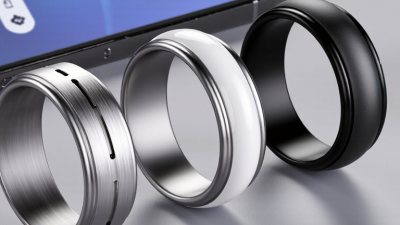
| 1 | Full-Service OEM/ODM Wearable Manufacturer | Shenzhen and Dongguan, Guangdong | Complete product development from industrial design to mass production | Titanium alloy, stainless steel, ceramic, epoxy resin and medical-grade coatings | PPG optical sensor, 3-axis accelerometer, skin-temperature sensor and capacitive sensing | Bluetooth Low Energy; mobile-app integration commonly supported | IP67 or IP68 design target, subject to product testing | ISO 9001 quality management; RoHS and REACH material compliance commonly requested | Housing, color, firmware, packaging, charging case and companion application | Approximately 8–16 weeks after specification and tooling approval |
| 2 | Precision Metal and Jewelry-Form-Factor Manufacturer | Dongguan and Huizhou, Guangdong | Miniature CNC machining, polishing, PVD finishing and decorative assembly | Titanium, 316L stainless steel, ceramic inserts and sapphire or strengthened glass elements | Sensor windows for PPG, motion and temperature modules supplied by an electronics partner | Bluetooth Low Energy | Usually engineered toward IP67 or IP68 after sealing validation | Dimensional inspection, surface-finish inspection and corrosion testing | Ring size range, metal finish, engraving, surface texture and enclosure design | Approximately 6–12 weeks, excluding new tooling development |
| 3 | Miniature Electronics and Sensor-Integration Supplier | Shenzhen and Huizhou, Guangdong | Flexible PCB assembly, low-power electronics and compact sensor integration | Metal or ceramic outer shell with flexible circuit and medical or wearable-grade encapsulation | Green and infrared PPG, accelerometer, gyroscope and skin-temperature sensing | Bluetooth Low Energy, with antenna tuning performed during engineering validation | IPX7 or IP68 target depending on enclosure architecture | ESD control, traceability, automated optical inspection and functional testing | PCB layout, sensor selection, firmware, data output and charging method | Approximately 8–14 weeks after engineering validation |
| 4 | Health-Wearable Contract Manufacturer | Shenzhen, Dongguan and Jiangsu | Assembly of wellness wearables and integration with health-data applications | Stainless steel, titanium, ceramic and skin-contact polymers | PPG heart-rate sensing, accelerometer, temperature sensing and sleep/activity algorithms | Bluetooth Low Energy with Android and iOS application support | IP67 is common; higher ratings require dedicated sealing and verification | ISO 9001; privacy, cybersecurity and regional radio requirements must be assessed by market | Dashboard design, API integration, firmware parameters and packaging localization | Approximately 10–18 weeks for a customized program |
| 5 | Ceramic and Advanced-Material Ring Manufacturer | Foshan, Dongguan and Jiangxi | Zirconia ceramic molding, sintering, polishing and scratch-resistant finishing | Zirconia ceramic, titanium internal frame and stainless-steel charging contacts | PPG and motion sensors integrated into an internal electronics cavity | Bluetooth Low Energy | IP68 target is technically possible when the ceramic body and seals are validated together | Material inspection, surface hardness, dimensional control and thermal-cycle testing | Ceramic color, gloss level, ring thickness, size range and internal layout | Approximately 10–20 weeks because ceramic tooling and process validation may be required |
| 6 | Low-Volume Prototype and Pilot-Run Supplier | Shenzhen and Shanghai | Rapid prototyping, proof-of-concept builds and design-for-manufacturing support | 3D-printed resin for prototypes; aluminum, stainless steel or titanium for pilot units | Development-board-based PPG, motion and temperature modules | Bluetooth Low Energy development platforms | Prototype units are generally not certified for water resistance | Engineering documentation, component traceability and prototype test reports | Mechanical fit, sensor placement, firmware proof of concept and charging design | Approximately 2–8 weeks for prototypes; longer for production tooling |
| 7 | High-Volume Consumer Electronics Manufacturer | Shenzhen, Dongguan and the Pearl River Delta | Automated assembly, supply-chain coordination and scalable production | Stainless steel, titanium, ceramic and injection-molded engineering polymers | PPG, accelerometer, temperature sensor, charging detection and battery monitoring | Bluetooth Low Energy with automated RF and functional testing | IP67 or IP68 depending on the final enclosure and verification program | ISO 9001, process-control plans, incoming inspection and end-of-line testing | Color variants, packaging, firmware localization and production test fixtures | Approximately 12–24 weeks for tooling, qualification and ramp-up |
| 8 | Medical and Wellness Device Development Partner | Suzhou, Shanghai and Zhejiang | Risk management, verification documentation and health-device engineering | Biocompatible-contact materials, stainless steel, titanium and medical-grade polymers | PPG, temperature and motion sensing; algorithm validation depends on intended claims | Bluetooth Low Energy with secure mobile-data transmission requirements | Product-specific; IP rating and cleaning resistance require documented testing | ISO 13485 may be available for applicable medical-device operations; regulatory classification is market-specific | Test protocols, risk files, software documentation and controlled design changes | Approximately 16–30 weeks for regulated or evidence-intensive programs |
| 9 | Battery, Charging and Power-Optimization Specialist | Shenzhen and Zhongshan, Guangdong | Small rechargeable battery integration, charging cases and low-power firmware | Metal or ceramic ring body, protected lithium-polymer battery and pogo-pin or wireless charging system | Power-efficient PPG, accelerometer and temperature modules | Bluetooth Low Energy with low-duty-cycle synchronization | IP67 is a common development target; charging interfaces require additional sealing controls | Battery safety testing, thermal protection, charging protection and transport documentation | Battery capacity, charging case, charging time, standby settings and power-management firmware | Approximately 8–16 weeks after battery and charging architecture approval |
| 10 | Private-Label and Export-Focused Wearable Supplier | Yiwu, Shenzhen and Ningbo | Ready-to-customize product platforms, export packaging and multi-market fulfillment | Stainless steel, titanium-colored alloys, ceramic components and polymer seals | Pre-engineered PPG, motion and temperature sensor packages | Bluetooth Low Energy; application language support varies by project | Existing models may claim IP67 or IP68, but claims must be verified for the exact SKU | RoHS, REACH, battery transport documents and destination-market radio approvals | Logo-free private labeling, packaging, color options, application branding and manuals | Approximately 4–10 weeks for existing platforms; 10–20 weeks for substantial changes |
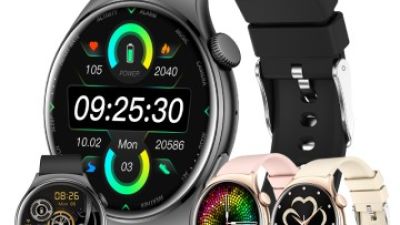
Designed for active men, this smart watch combines practical communication tools with dependable fitness performance. Bluetooth calling lets you answer calls directly from your wrist while running, cycling, working out, or commuting. It also delivers reminders for SMS and notifications from popular social apps, so you can check important updates with a quick lift of your wrist. With IP67 waterproof protection, the watch is built to handle splashes, sweat, and everyday outdoor activities, making it a reliable companion for changing conditions.
With more than 100 indoor and outdoor sports modes, it tracks steps, distance, calories burned, and active minutes across activities such as walking, running, cycling, basketball, and football. Fitness data can be synchronized with the GloryFit app for a clearer view of daily performance. The watch also supports 24-hour heart rate and blood oxygen monitoring, along with sleep analysis covering deep sleep, light sleep, REM sleep, awake periods, and short naps. Stress tracking adds another useful perspective, helping users stay aware of everyday wellness while maintaining an active routine.
It is a small wearable device that tracks selected body signals. Sensors may measure heart rate, skin temperature, sleep, movement, and blood oxygen. It is not a medical diagnosis tool.
China has connected suppliers for sensors, molds, batteries, coatings, software, and assembly. These nearby resources can shorten development time and reduce production costs. Lower cost still needs careful testing.
Wear the sample during sleep, exercise, office work, and normal walking. Check comfort, sensor contact, charging stability, and reading consistency. Test again.
Ask about sensor types, calibration methods, testing procedures, app compatibility, data storage, and firmware updates. Request clear written answers from technical staff. Sales promises are not enough.
Use a simple scorecard for performance, communication, documents, delivery history, support, and production consistency. Record results from identical tests. No scorecard is perfect.
Request relevant quality, safety, wireless, material, and battery-transport documents. Verify document numbers and issuing organizations independently. An emailed certificate may not prove product accuracy.
Unit prices may vary with sensors, materials, software, order volume, and charging design. Custom options can include engraving, colors, packaging, app interfaces, and firmware changes. Small orders often cost more.
Review factory equipment, monthly output records, defect rates, inspection methods, and production lead times. A claimed capacity means little without consistent testing records. Brochures can look impressive.
Charging contacts may loosen, coatings may feel uncomfortable, or readings may vary between units. Battery life can differ from advertising claims. My sample review may miss long-term defects. Repeated checks remain necessary.
This guide explores the growing Health Smart Ring industry in China and explains why Chinese manufacturers have become important partners for global businesses. It introduces the main functions of these compact wearable devices, including sleep monitoring, heart rate tracking, blood oxygen measurement, activity analysis, temperature sensing, and wellness insights. The article also presents a practical framework for evaluating China’s leading suppliers, covering product quality, engineering capabilities, communication, quality control, certifications, minimum order quantities, and production capacity.
Readers will learn how to compare suppliers according to health metrics, materials, battery performance, software integration, pricing, customization options, and manufacturing flexibility. Supplier profiles focus on general production strengths rather than brand promotion, helping buyers understand the differences between factories, design houses, and full-service manufacturers. Finally, the guide offers a clear selection process for choosing a suitable Chinese partner based on target market, budget, product positioning, compliance requirements, delivery expectations, and long-term cooperation potential.