If you're hunting for the best Smart Rings For Men suppliers in China, it’s not just about comparing product pics and bargain prices. You’ve also got to look at things like manufacturing experience, engineering know-how, quality systems, and how reliable they are with exports. Honestly, a slick website doesn’t tell you much. What really counts is solid factory evidence.
When you're vetting suppliers, don't just take their word for it. Look for ones that can show documented production lines, steady material sources, and technicians who actually know what they're doing. Before you start talking about big orders, get samples. Then really put them through their paces: wear the ring, check how comfy it feels, see if the sensor readings hold up, test the charging contacts, battery life, and whether the app stays stable. A good sample should feel smooth on your finger and keep connecting reliably even after you've used it a bunch. Also ask about waterproof rating, Bluetooth performance, packaging, warranty, and minimum order quantities—those details matter more than they might seem. Your compliance docs really need to line up with both the target market and the product specs. And honestly? Independent testing can catch issues that suppliers might gloss over—or just plain miss.
Communication says a lot about a supplier's professionalism, too. If they're reliable, they'll answer technical questions in a clear way and have inspection records you can actually trace. And when something goes wrong? They should be able to explain how defects get handled—not just give you the old “we never make mistakes” line. Video calls, factory visits, third-party audits—those can all help build confidence. Still, a supplier who looks great on paper doesn't always deserve instant trust. Specs can shift once production starts, and honestly, that's a risk people tend to underestimate.
Honestly? A solid sourcing process usually means checking out at least three suppliers who actually qualify. And don’t just look at the unit price—look at the total cost. That includes tooling, packaging, shipping, testing, software support, and after-sales service too. The best partner might not be the one selling the cheapest Smart Rings For Men. What you really want is steady quality, realistic timelines, support that gets back to you, and some wiggle room to improve the product down the road. Small trial orders? Yeah, they make sense. They’ll show you the weak spots before your brand has to deal with them.
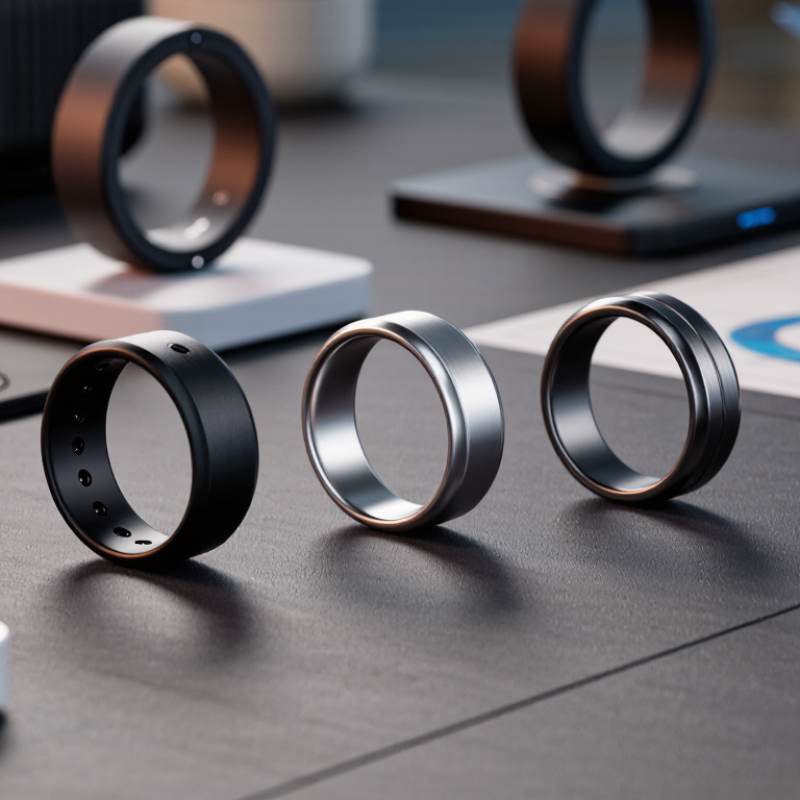
Finding China’s top smart ring suppliers for men starts with measurable product specifications, not attractive catalogs. IDC’s Worldwide Quarterly Wearable Device Tracker recorded 520.1 million wearable shipments globally in 2023. That scale signals intense competition and rising expectations. A supplier should therefore offer accurate sensors, stable software, and repeatable production. Not just a polished sample.
Define the ring around real use. Request sizes covering common adult fingers, including half-size options where possible. Specify a lightweight titanium or medical-grade steel body, an IP68 rating, and at least five days of practical battery life. Ask for heart-rate, sleep, blood-oxygen, and activity tracking, while treating wellness readings as non-medical information. Counterpoint Research’s smart-ring coverage highlights health monitoring, comfort, and battery endurance as important buying factors. The numbers still need verification.
During supplier audits, review sensor calibration records, battery-cycle tests, waterproof testing, and defect rates from recent production lots. Request three samples from separate batches. My first mistake was trusting one excellent prototype. Production reality was less impressive. Check the companion application, data export, firmware update process, and privacy controls before discussing volume. Also compare tooling costs, minimum order quantities, replacement policies, and inspection procedures. A factory with clear test documents may be safer than a cheaper supplier with vague claims.
MIIT manufacturing data offers a practical starting point for mapping China’s smart-ring supplier clusters. By 2023, MIIT had identified 45 national advanced manufacturing clusters. These clusters often combine precision machining, sensors, batteries, testing laboratories, and export logistics. Shenzhen and Dongguan are strong candidates for electronics integration and compact tooling. Suzhou and Ningbo may offer deeper capabilities in precision components, assembly, and industrial quality control. However, MIIT does not publish a dedicated “smart ring supplier” category. That limitation matters.
Industry demand supports careful supplier screening. IDC reported 537.7 million wearable devices shipped globally in 2024, representing 11.5% annual growth. Smart rings remain a smaller segment, but their compact size requires unusual production discipline. Ask suppliers for evidence of ring-size consistency, sensor calibration, coating durability, charging-cycle tests, and waterproof validation. Factory audit records should match the registered manufacturing address. They often do not.
Use MIIT cluster information to create a regional shortlist, then verify each factory through production videos, sample inspections, and recent testing reports. Check whether the supplier controls assembly or mainly coordinates subcontractors. This distinction is easy to miss. A supplier may show advanced equipment while outsourcing critical sensor integration. I would also compare defect rates across two production batches. One sample batch can look perfect. A second batch reveals the truth. Cite sources carefully, including MIIT manufacturing-cluster publications and IDC’s Worldwide Quarterly Wearable Device Tracker. Supplier data changes quickly, so recheck it before signing.
How to Find China Top Smart Rings For Men Suppliers?
The smart ring market is expanding quickly. Grand View Research projects a 24.1% CAGR from 2024 to 2030. IDC reported 520 million wearable devices shipped globally in 2023. Fast growth increases supplier risk. Ask for evidence, not attractive product pages.
FDA compliance depends on the health claim. A wellness ring is not automatically FDA-approved. If a supplier claims medical diagnosis or treatment, request the correct FDA pathway and searchable device records. Check the exact model, software version, intended use, and responsible manufacturer. Do not accept a generic FDA logo.
CE marking also needs careful verification. It shows conformity with applicable European requirements, not universal product quality. Request the EU Declaration of Conformity and supporting technical files. For skin-contact materials, review ISO 10993 testing, including cytotoxicity, sensitization, and irritation. The report should identify the tested material and finished product. Material substitutions can quietly invalidate old results.
In supplier audits, I compare laboratory names, report dates, sample descriptions, and test methods. A certificate alone is weak evidence. Ask whether testing followed a recognized quality system. ISO/IEC 17025 laboratory accreditation strengthens confidence. Still, paperwork can miss production changes. Request batch controls, coating specifications, and recent samples. Small details matter. An uncomfortable gap remains: many sellers repeat “FDA certified” without defining the claim. Treat that wording as a warning, not proof. Personally, I would delay a purchase when health data, biocompatibility evidence, or traceability remains unclear.
Finding reliable China Smart Rings For Men suppliers requires more than browsing low online prices. Competitive RFQs expose the real differences in MOQ, OEM pricing, and lead times. Grand View Research forecasts the global smart ring market to grow at roughly 24% annually through 2030. Demand is rising, but supplier capability remains uneven.
Send the same RFQ to at least five factories. Specify ring sizes, sensor functions, battery target, app language, packaging, and certification requirements. Request pricing at 500, 1,000, and 5,000 units. A low MOQ may increase tooling and unit costs. Ask whether the quote includes molds, firmware adjustments, testing, packaging, and shipping preparation. Ask for evidence. Not promises.
Lead time should be separated into sampling, tooling, pilot production, and mass production. A practical RFQ may show 7–12 days for samples, 15–25 days for tooling, and 30–60 days for production. These ranges need confirmation from factory capacity records. Mordor Intelligence and MarketsandMarkets both project strong double-digit growth for the smart ring sector, increasing pressure on production schedules. One sourcing mistake is accepting an attractive OEM price without checking component availability. Delays often begin with a missing sensor or unclear software responsibility. I would also request recent inspection records, defect-rate data, and two unedited production videos. Some suppliers may resist; that response itself deserves attention. Pricing is only useful when quality, timing, and communication are measured together.
Indicative competitive RFQ benchmark for men's smart rings manufactured in China. Prices are estimated FOB China ranges for standard configurations and should be confirmed through written supplier quotations.
| Supplier Code | Core Product Positioning | Indicative MOQ (Units) |
OEM Unit Price (USD, FOB China) |
Sample Fee (USD) |
Sample Lead Time | Mass Production Lead Time | Supported Ring Sizes | Typical Materials | Health & Activity Features | App & Connectivity | OEM Options | Quality Documentation | RFQ Evaluation Score | Commercial Status |
|---|---|---|---|---|---|---|---|---|---|---|---|---|---|---|
| Supplier A | Entry-level lifestyle and sleep tracking | 500 | $18.50–$24.00 | $80–$150 | 7–10 days | 25–35 days | US 7–13 | Titanium alloy body, PVD coating, resin inner surface | Heart rate, blood oxygen, sleep, steps, calories | Bluetooth Low Energy; Android and iOS SDK available | Logo, color, gift box, manual, app interface | RoHS, CE, FCC test reports available upon request | 82/100 | Suitable for pilot orders |
| Supplier B | Mid-range wellness ring for DTC brands | 1,000 | $27.00–$36.00 | $120–$220 | 10–14 days | 30–45 days | US 6–14 | 316L stainless steel or titanium, PVD finish, medical-grade epoxy | Heart rate variability, sleep stages, temperature trend, activity tracking | Bluetooth Low Energy; API integration subject to project review | Industrial design changes, packaging, firmware, app branding | ISO 9001 manufacturing system; RoHS and CE documentation | 89/100 | Best overall balance |
| Supplier C | Premium titanium ring with advanced sensors | 2,000 | $39.00–$58.00 | $180–$320 | 14–18 days | 40–55 days | US 6–15 | Grade 2 titanium, PVD or DLC coating, hypoallergenic inner coating | Heart rate, HRV, SpO2, skin temperature, sleep, recovery, workouts | Bluetooth Low Energy; cloud API and white-label app options | Custom sensor layout, firmware, dashboard, packaging, colors | ISO 9001; RoHS, CE, FCC, UN38.3 battery documentation | 91/100 | Premium OEM candidate |
| Supplier D | High-volume private-label smart ring | 3,000 | $21.00–$29.00 | $90–$180 | 7–12 days | 22–32 days | US 7–13 | Stainless steel, PVD coating, polymer sensor cover | Heart rate, sleep duration, steps, calories, sedentary alerts | Bluetooth Low Energy; standard companion app | Logo, packaging, color selection, language localization | RoHS and CE test reports; factory inspection supported | 84/100 | Cost-focused option |
| Supplier E | Health-oriented ring for subscription or app ecosystems | 1,000 | $31.00–$45.00 | $150–$280 | 12–16 days | 35–50 days | US 6–14 | Titanium alloy, ceramic coating, skin-contact polymer | HRV, sleep stages, blood oxygen, temperature, respiratory rate estimates | Bluetooth Low Energy; API and data-export options | White-label app, API customization, firmware, packaging, user manuals | ISO 9001; RoHS, CE, FCC, battery transport reports | 90/100 | Strong for digital products |
| Supplier F | Custom-design ring for established consumer electronics brands | 5,000 | $46.00–$72.00 | $250–$450 | 18–25 days | 50–70 days | US 6–16 | Premium titanium, ceramic, sapphire-like sensor window | Advanced sleep, recovery, activity, temperature and biometric trend monitoring | Bluetooth Low Energy; custom SDK, API and cloud integration | Full tooling, ID/MD support, custom electronics, firmware and app | ISO 9001; RoHS, CE, FCC; third-party inspection available | 94/100 | Best for scaled programs |
| Supplier G | Minimalist fashion-focused smart ring | 800 | $24.00–$33.00 | $100–$200 | 8–12 days | 28–40 days | US 7–14 | 316L stainless steel, PVD finish, ceramic decorative insert | Sleep, heart rate, steps, calories and basic wellness trends | Bluetooth Low Energy; standard Android and iOS application | Color, engraving, packaging, user interface language | RoHS, CE and FCC documentation subject to model configuration | 86/100 | Good for fashion retail |
Pricing excludes tooling, molds, software development, custom certification, shipping, taxes and payment fees. Final MOQ, specifications, warranty terms and lead times depend on sensor selection, ring sizes, packaging, firmware changes and order quantity.
When sourcing the Best Smart Rings For Men, audit evidence before reviewing sales claims. Ask suppliers for battery capacity records, charging-cycle data, and sensor calibration reports. A ring showing 20 mAh on paper may perform differently after repeated charging. Request test samples from separate production batches. Real differences often appear there.
IP68 requires careful checking against IEC 60529. The code covers protection against dust and water ingress, not battery life or sensor accuracy. More importantly, “8” depends on the tested depth and immersion time agreed by the manufacturer and laboratory. Ask for the full report, test date, sample quantity, and laboratory details. Check whether the ring was tested with its charger, seals, and buttons in normal positions. A sealed shell can still hide weak charging contacts.
Test the sample yourself when possible. Use a controlled water test, then inspect charging behavior, skin-temperature readings, heart-rate tracking, and corrosion after drying. Do not treat one successful test as permanent proof. Sweat, soap, heat, and small scratches may reduce protection. Some supplier documents look professional but omit critical conditions. That is a warning sign. Compare factory records with independent results, and keep written acceptance criteria for battery retention, sensor deviation, and ingress protection. A reliable supplier should welcome these questions, even when the answers expose limitations.
When sourcing China Top Smart Rings For Men Suppliers, inspect evidence, not polished factory photos. The ISO Survey 2023 recorded more than 1.2 million ISO 9001 certificates worldwide. However, certification alone does not prove reliable smart ring production.
Ask for the current certificate, issuing body, scope, and factory address. The scope should cover electronics assembly, testing, or wearable device manufacturing. Review controlled documents, calibration records, nonconformity logs, and corrective-action reports. A capable factory can show how it handles battery testing, sensor accuracy, waterproof checks, and final inspection. Request three recent batch records. Compare defect rates, rework notes, and shipment approvals. Small gaps matter.
BSCI evidence deserves equal attention. Its audit framework examines working hours, wages, health, safety, and worker representation. The International Labour Organization reports that excessive working hours remain a major workplace risk globally. Therefore, check the audit date, grade, audit scope, and unresolved findings. Do not accept a screenshot without verification. For Rings For Men Muslim collections, confirm material declarations, skin-contact safety, packaging requirements, and accurate product claims. Cultural suitability should be documented, not assumed.
I would also conduct a live video audit. See the incoming inspection area. Watch one test run. Ask why a recent defect escaped. A hesitant answer is useful evidence. Supplier evaluation is never perfect, and I have seen impressive certificates coexist with weak production discipline. Recheck before placing a larger order.
How to Find China Top Smart Rings For Men Suppliers?
Finding capable China smart ring suppliers requires more than comparing prices. Review factory experience, testing records, production capacity, and communication quality. Ask for pilot-test samples before discussing a large order. Examine the ring’s charging performance, sensor readings, battery life, app connection, and surface finish. Test different finger sizes under daily conditions, including sweat, repeated charging, and light impacts. Small details often reveal larger production risks.
Include an AQL 1.5 inspection requirement in the purchase agreement. Define acceptable major and minor defects clearly, with photographs and measurement limits. An independent inspector can check sampling, packaging, functions, accessories, and labeling before shipment. AQL 1.5 is useful, but it is not a magic shield. One inspection cannot replace supplier audits or sample testing. I have seen specifications that looked complete but missed charger compatibility. That oversight created unnecessary rework.
Tips: Keep sealed samples from the approved batch. Record battery results and sensor deviations. Request a corrective-action report for every failed item. For designs marketed as Muslim Rings For Men, confirm comfortable sizing, discreet styling, material documentation, and culturally suitable presentation. Do not rely only on factory videos. Verify evidence. Bulk orders deserve slower decisions.
Use regional manufacturing data to build an initial supplier shortlist. Electronics hubs may support sensors, batteries, tooling, and final assembly. This is only a starting point. The data does not prove smart-ring expertise.
Check precision machining, sensor integration, battery handling, testing, and export preparation. Ask whether the supplier owns assembly equipment or uses subcontractors. A factory tour can reveal idle machines and outsourced processes. Photos alone are weak evidence.
Request the registered manufacturing address, recent audit records, testing reports, and production videos. The documents should match the actual facility. Sometimes they do not. That mismatch deserves a written explanation.
Measure ring sizes, sensor calibration, coating durability, charging cycles, and water resistance. Inspect more than one sample. A perfect sample proves little. Compare results from two production batches.
Separate general wellness functions from medical diagnosis or treatment claims. Request evidence for the exact model, software version, and intended use. Do not accept a regulatory logo without supporting records. Health claims require careful review.
Request testing for irritation, sensitization, and material toxicity. The report should identify the tested material and finished product. Check the laboratory’s competence and testing methods. A substituted coating may invalidate earlier results.
Send the same RFQ to at least five factories. Include sizes, sensors, battery targets, app language, packaging, and testing needs. Request quotes for 500, 1,000, and 5,000 units. A low minimum order may hide higher tooling costs.
Separate sampling, tooling, pilot production, and mass production schedules. Sample work may take 7–12 days. Tooling may take 15–25 days. Mass production may require 30–60 days. Confirm these ranges with capacity records.
Missing sensors, unclear software responsibilities, and limited battery supply can cause delays. Ask who controls firmware, testing, packaging, and component purchasing. Request recent defect rates and inspection records. Low pricing is not enough. I would still hesitate without clear accountability.
Finding reliable Smart Rings For Men suppliers in China requires a structured, evidence-based process. Begin by defining product specifications according to market demand and wearable-device shipment trends, then identify suitable manufacturing clusters through official industry data. Assess each supplier’s ability to deliver health-related functions and request documentation supporting applicable FDA, CE, and ISO/IEC 10993 requirements. Competitive RFQs can help compare minimum order quantities, OEM costs, customization options, payment terms, and production lead times.
Before making a bulk commitment, audit the factory’s battery safety, sensor performance, water-resistance claims, and IP68 testing against IEC 60529 requirements. Review ISO 9001 procedures, BSCI evidence, inspection records, and corrective-action systems to evaluate manufacturing consistency and labor responsibility. Finally, order pilot samples and conduct functional, durability, charging, and comfort tests using an AQL 1.5 inspection standard. This process helps buyers reduce quality risks, verify supplier capabilities, and select a dependable long-term partner.