So, when you’re picking out a Heart Waterproof Ring, the first thing to figure out is what “waterproof” actually means for that specific ring. Honestly, it can be a bit of a mixed bag. Some rings are totally fine if you wash your hands or get caught in the rain, but others are actually tested for swimming and come with a depth rating. You really want to check the manufacturer’s water-resistance rating and care instructions instead of just trusting the bold claim on the label. The little details? They matter more than you’d think. You’ll want to check for clear details on the seals and charging contacts—and also whether you’re supposed to take the ring off before hot showers or saltwater.
Let’s be honest—comfort kind of matters a lot. You can love a ring, but if it pinches after a long walk or spins around when your hands are wet, you’re probably not going to wear it all that often. So before you order, maybe check the sizing guide, remember that fingers change size during the day, and peek at the return policy. If the ring does heart rate tracking, think about what you actually need—like workout stats or overnight data—and see if the features line up. And keep in mind, those readings are more like general wellness clues, not a medical diagnosis. No device is perfect, right? Honestly, sensor readings can be kind of all over the place. It really depends on how the thing fits, how much you're moving around, your skin, and just a bunch of other factors.
When you're trying to figure out if something's actually reliable, you need details you can verify—published specs, a warranty that actually says something, and a maker who's reachable. Don't skip the recent reviews, either. Look for patterns: people complaining about fogging, charging glitches, or fit changing after it gets wet. Independent tests are great for context, but take them with a grain of salt until you know exactly what they tested and under what conditions. And hey, that sleek finish might look great in the product shot, but the real test is whether it stays comfortable and works like it should when you're just using it day to day. Before you actually buy it, take a second and ask yourself what trade-offs you're okay with. I mean, just because a ring is water-resistant doesn't automatically make it the best pick for you.
Understanding What “Waterproof” Means for a Ring
For a ring, “waterproof” rarely means protection under every condition. In jewelry listings, it usually describes how well the materials and construction tolerate water during ordinary wear. Unlike many electronic devices, rings are not usually compared through one consistent water-resistance rating. So check the details, not just the label. A China Heart Waterproof Ring may handle handwashing, yet that wording alone cannot confirm its durability in a pool or shower.
Look closely at the metal, finish, and any stones or decorative settings. Water can collect beneath raised details, while soap and lotion may leave residue around a heart-shaped setting. Chlorinated pools, salt water, and hot tubs can also affect some finishes over time. Take the ring off before swimming if its care instructions are unclear. Dry your hands and the ring after washing; trapped moisture can irritate skin, especially beneath a snug band. Small habit. Useful protection. Even a well-made ring can show wear, and I would not treat “waterproof” as a promise of permanent shine.
Comparing Ring Materials and Their Water Resistance
A heart-shaped ring can look delicate, but water resistance depends more on its materials and construction than its outline. Titanium and stainless steel generally tolerate brief contact with fresh water well, and they resist corrosion better than many softer metals. Still, a ring’s joints, finish, and stone setting can be vulnerable. Small details matter.
Sterling silver may darken faster when exposed to moisture, sweat, or chemicals, so dry it after washing your hands. Gold itself handles water reasonably well, but alloys, plating, and glued-in stones can change that. Silicone rings are flexible and easy to rinse, though cuts or stretching may shorten their useful life. Tungsten is hard and scratch-resistant, but a hard surface does not guarantee that every setting is secure.
“Waterproof” is not a universal material rating. Check the maker’s care guidance, especially if the ring has a heart-shaped stone or decorative edges that can trap soap. For swimming, hot tubs, or frequent showers, removing it is the safer choice. Not always convenient. I’d still be cautious with any ring that has plating, adhesives, or tiny accent stones, even when its main metal seems water-resistant. After a splash, rinse away residue and dry the setting with a soft cloth.
How to Choose the Best Heart Waterproof Ring?
Comparing the general water-related durability of common ring materials
Ratings are a general, qualitative comparison of how the materials typically tolerate water exposure—not a laboratory measurement or a guarantee that a finished ring is waterproof. Alloys, coatings, stones, settings, and adhesives can affect performance. Rinse and dry rings after exposure to salt water or chlorinated water, and follow the care guidance for your specific ring.
Choosing a Heart Design That Suits Your Style
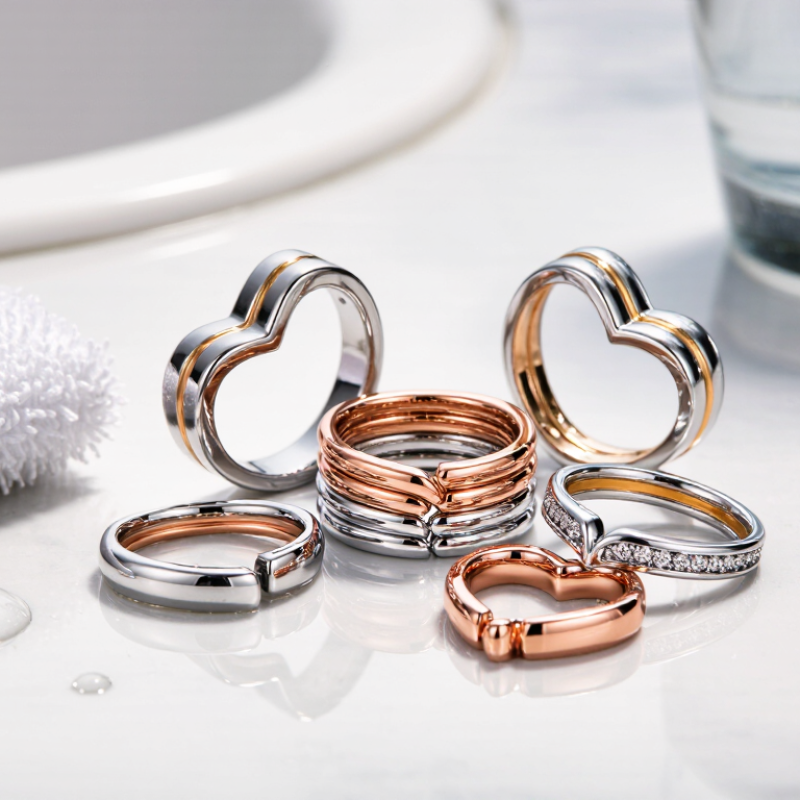
A heart ring can look romantic, playful, or quietly modern, depending on its proportions. A small, softly rounded heart feels subtle beside a slim band. A larger outline makes a clearer statement and may catch on knit sleeves. Look at the ring on your own hand, not only in a product photo. Finger length, skin tone, and the jewelry you already wear all change how the shape reads. Small details matter.
For a wearable Best Heart Waterproof Ring, match the design to your routine as well as your style. A low-profile heart is often easier for daily tasks than a raised stone or sharp-edged setting. Polished metal feels classic; a matte finish can look more understated. Check the listed metal, clasp or setting details, and care guidance before buying. “Waterproof” can mean different things across products, so don’t assume every finish or stone handles frequent soaking equally well.
It is easy to focus on the heart and overlook comfort. Try comparing band width and sizing, especially if your fingers swell in warm weather. A ring that looks delicate may feel surprisingly solid in person. I’d also consider whether the design still feels like you with casual clothes, not just a special outfit. That judgment can be imperfect, and it’s worth revisiting before choosing.
Finding the Right Ring Size and Comfortable Fit
Choosing the right size matters as much as choosing a heart design. Measure the finger where you plan to wear the ring, preferably at the end of the day. Fingers can change slightly with heat, cold, and activity. Use a flexible measuring tape or a strip of paper, then compare the result with the seller’s sizing chart. If you are between sizes, check whether the ring has a wide band or raised heart setting; both can feel tighter than a slim, flat ring. A Heart Waterproof Ring Manufacturer may provide measurements, but compare them with your own rather than assuming every chart fits the same.
The ring should slide over your knuckle with light resistance and sit comfortably without pinching. Make a fist, bend your finger, and let your hand hang naturally. Any sharp edge or heart-shaped detail that catches on nearby fingers deserves attention. Too loose is not ideal. It may rotate or slip off when your hands are wet, even if the ring is described as waterproof. Too tight can leave a deep mark and become difficult to remove. I once thought a snug fit meant a better fit; it did not. Recheck the size on another day, especially if your hands feel unusually warm or swollen. A small fit difference can change how the ring feels throughout the day.
Matching the Ring to Your Daily Activities
A heart-shaped waterproof ring should suit your real routine, not an idealized one. For desk work, prioritize a smooth setting that will not catch on sleeves or a laptop bag. During workouts, a close but comfortable fit matters; fingers can swell with heat and exertion. Fit matters. The World Health Organization’s 2022 Global Status Report on Physical Activity estimated that 31% of adults worldwide were insufficiently active in 2020. Daily routines vary widely, so consider whether your ring will face long walks, gym sessions, or mostly handwashing.
For swimming or frequent cleaning, check the maker’s stated water-resistance conditions rather than relying on “waterproof” alone. Chlorine, salt, soap, and hot water can affect finishes or settings, and water resistance does not mean scratch resistance. Remove the ring for heavy lifting or tasks where it may snag. The World Gold Council’s Gold Demand Trends 2024 reported 2,092 tonnes of global gold jewellery demand; that figure reflects demand, not how a particular alloy handles your activities. Ask a Heart Waterproof Ring Factory for the metal composition, care guidance, and limits of any water-resistance claim before choosing. A small detail, but an important one.
Checking Quality, Care Requirements, and Warranty
A “waterproof” label is not a test result. Ask what protects the ring: solid metal, a coating, sealed settings, or a combination. Request written details about the alloy, coating thickness, and water-resistance test conditions. Check the underside and stone settings closely; tiny gaps can trap soap and moisture. Look for clear limits, not vague promises.
Warranty wording matters. Confirm whether it covers fading, corrosion, loose stones, and repair labor, and whether swimming, showering, or cleaning products void coverage. Keep the receipt and care instructions. The World Gold Council’s Gold Demand Trends: Full Year 2024 reported global gold demand of 4,974 tonnes, but market demand does not prove any ring’s water resistance. That distinction is easy to miss. A gold alloy’s behavior also depends on its composition and construction.
Care still matters. Rinse the ring after saltwater or chlorinated-water exposure, then dry it with a soft cloth. Avoid abrasive cleaners, especially on plated finishes or delicate stones. GIA’s jewelry-care guidance cautions that some gems need gentler cleaning, so check the specific stone rather than relying on a generic care label. I would not assume “waterproof” means maintenance-free; even careful owners can overlook small scratches or a worn coating. Recheck the warranty before buying.
Conclusion
Choosing the best Heart Waterproof Ring starts with understanding what “waterproof” means in practice. A ring may resist splashes or brief exposure to water without being suitable for swimming or constant wear in wet conditions. Compare materials for their water resistance, durability, and care needs, then choose a heart design that reflects your personal style and feels comfortable for everyday use.
A good fit is essential, so check your size and consider how the ring feels during normal movement. Think about your daily activities and whether the ring can handle the level of water exposure and wear they involve. Before buying, review its quality, cleaning instructions, and warranty details. These considerations can help you select a heart-shaped ring that balances appearance, comfort, and practical care.