Leave Your Message
0%

So, when you're trying to pick out the best smart ring, it really all boils down to a simple but important question: what health info will actually help you make better daily choices? Now, a smart ring isn’t just about counting steps or showing fancy colorful charts. It’s about tracking sleep habits, resting heart rate, heart rate variability, skin temperature, activity levels, and how well you're recovering. And here’s the thing: the ring needs to gather these details reliably and also be comfortable enough — whether you’re sleeping, working out, traveling, or just going about your daily routine.

Dr. Shyamal Patel, the Chief Medical Officer at Oura Health, hits the nail on the head when he says, “Wearables should help you make smarter decisions, not replace your doctor’s judgment.” That’s pretty important to remember. A smart ring can pick up on patterns—like noticing your nighttime heart rate spike or shorter sleep — but it can’t tell you exactly why those things happen. Things like stress, getting sick, drinking, medications, or even just a bad fit can influence the results.

In this guide, we’ll cover the key factors you should consider before choosing a device. Sure, sensor quality matters — but don’t forget about battery life, how easy it is to charge, how clear the app is, whether there are ongoing subscription fees, and how they handle your data. Companies like Apple, Samsung, Oura, Ultrahuman, and RingConn each approach these aspects differently. And honestly, not every feature is gonna be useful for everyone; it really depends on what you need.

Some folks want detailed recovery stats. Others prefer straightforward sleep tracking and fewer notifications popping up. Athletes might care most about training readiness, while shift workers might value flexible sleep summaries. Your personal goals really should shape your choice.

Of course, there’s always some doubt. A shiny score can look super precise — but the underlying data isn’t always perfect. So, the best smart ring isn’t necessarily the one with tons of features. It’s the one that gives you easy-to-understand info, helps you build sustainable habits, and is comfortable enough to wear all the time without fuss.
How to Choose the Best Smart Ring for Health Tracking?

What Is a Smart Ring and How Does It Track Health?

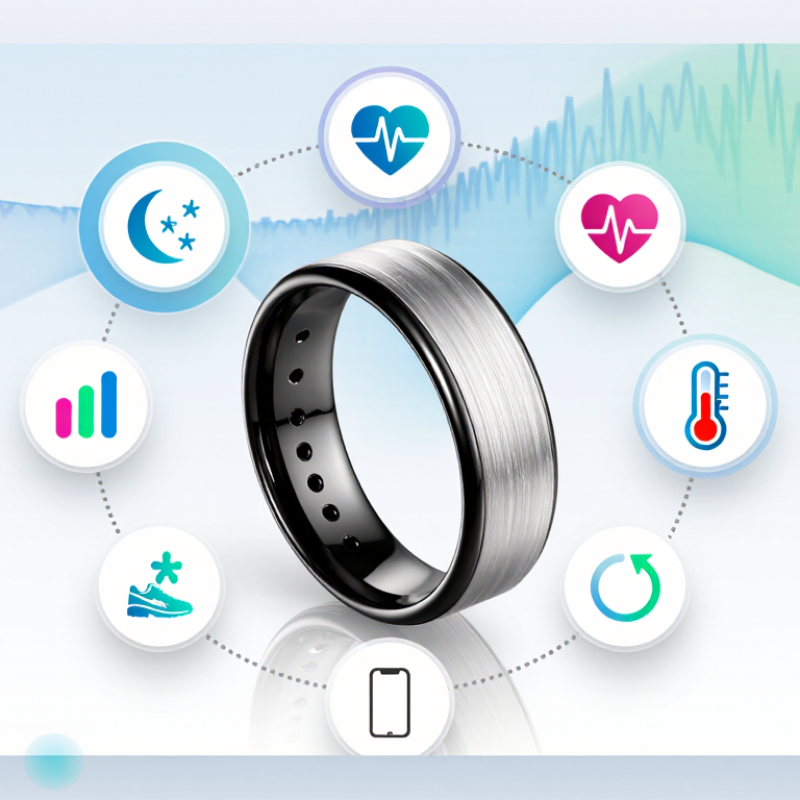
A Smart Health Ring is a small wearable that sits around your finger, where blood flow is easy to measure. Its optical sensors use light to estimate heart rate and heart-rate variability. An accelerometer records movement, while temperature sensors notice overnight changes. Some models also estimate blood oxygen and breathing patterns.

In daily use, the ring may detect restless sleep after you turn repeatedly at 3 a.m. It can then combine those signals into sleep, recovery, or stress scores. These scores are useful trends, not medical diagnoses. Grand View Research estimates that the global smart ring market will expand strongly through 2030. IDC also reported 520.5 million wearable-device shipments worldwide in 2023. However, market growth does not guarantee perfect accuracy. A loose fit, cold fingers, tattoos, or unusual movement can distort readings. I would question any score that conflicts with how I actually feel.

Tips: Wear the ring consistently, especially during sleep. Check its fit after exercise and hand washing. Compare weekly patterns, not one alarming morning. Review the privacy policy before sharing health data. If a reading seems unusual, repeat it and seek qualified medical advice when needed.

Which Health Metrics Matter Most for Your Personal Goals?

How to Choose the Best Smart Ring for Health Tracking?

The right smart ring depends on your personal health question, not its feature count. If sleep is your priority, track total sleep, bedtime consistency, and nighttime awakenings. Adults generally need at least seven hours, according to the Centers for Disease Control and Prevention. A ring showing six hours and frequent interruptions may reveal a more useful problem than a perfect-looking daily score. I have found consistency more informative than one restless night.

For cardiovascular awareness, resting heart rate and heart-rate variability can show changes after stress, illness, alcohol, or poor recovery. However, these measurements are not diagnoses. Research published in the Journal of the American Heart Association links regular physical activity with better cardiovascular health, while World Health Organization guidelines recommend 150–300 minutes of moderate activity weekly. Choose a device that records active minutes clearly, rather than hiding them behind a confusing score. Small details matter.

Skin temperature can support cycle or illness tracking, but readings vary with room temperature and finger position. Blood oxygen estimates may also be unreliable during movement or poor fit. The U.S. Food and Drug Administration warns that general wellness devices should not replace professional medical evaluation. I would compare trends across several weeks, then question unusual results before reacting. No metric is perfect. A useful ring should make your habits easier to understand, not make every fluctuation feel urgent.

How to Compare Smart Ring Sensors, Accuracy, and Data Quality

A reliable Health Smart Ring starts with its sensors, not its appearance. Optical sensors estimate heart rate and blood oxygen through reflected light. Temperature sensors can reveal overnight changes, while accelerometers detect movement and sleep patterns. Each sensor has limits. Cold fingers, loose fitting, sweat, and darker environments can affect readings.

Fit changes everything. During testing, wear the ring on the same finger for several nights. Compare its heart-rate readings with a clinically validated monitor during rest and exercise. Check whether sleep results remain consistent after late meals, travel, or a restless night. A ring that records every minute may still produce weak data if frequent gaps appear. Look for clear measurement schedules, missing-data notices, and explanations of confidence levels.

Data quality deserves careful attention. Some devices show raw trends, while others provide simplified scores. Raw trends help you notice a rising resting heart rate or repeated temperature changes. However, these signals are not diagnoses. Independent validation studies are more useful than dramatic advertising claims. Check the study size, testing conditions, and whether researchers compared results with accepted medical equipment. I once trusted a perfect-looking sleep score, but the ring had shifted overnight. That mistake changed my view. Accuracy is not a single number; it depends on fit, skin contact, software updates, and personal habits. Choose the device that explains uncertainty instead of hiding it.

How to Evaluate Comfort, Fit, Materials, and Everyday Wearability

Choosing a Smart Ring For Health starts with comfort, not feature lists. IDC’s Worldwide Quarterly Wearable Device Tracker recorded about 538 million wearable shipments in 2024. That scale suggests a practical lesson: people keep using devices that fit daily routines. A ring should feel quiet during typing, sleeping, showering, and carrying groceries. Fit matters more. Measure your finger at different times, because heat and exercise can cause swelling. Do not guess.

A useful home test lasts several days. Wear the ring on your non-dominant hand, then check for redness, pressure marks, or spinning. It should stay stable without leaving a deep impression. A slightly loose ring may lose contact during sleep. A tight ring may become uncomfortable overnight. My first instinct is often wrong here; “secure” can slowly become irritating. Comfort is not a luxury when health tracking depends on regular wear.

Materials also deserve careful attention. Look for clearly disclosed metals, smooth edges, and a surface that tolerates frequent washing. ISO 10993 guidance evaluates biological safety for materials contacting skin, although consumer products may not receive identical testing. The 2024 Deloitte Connected Consumer Survey reported continued interest in health monitoring, but interest does not guarantee consistent use. Check charging frequency, water resistance claims, and cleaning instructions before purchase. A ring that needs constant removal can create missing data. Sometimes the simpler design wins.

How to Choose the Best Smart Ring for Health Tracking? - How to Evaluate Comfort, Fit, Materials, and Everyday Wearability
Evaluation Dimension Useful Data or Benchmark What to Look For Practical Evaluation Method Priority
Ring Weight Many health-tracking rings weigh approximately 2–8 g, depending on size, sensors, and materials. A lighter design is generally less noticeable during sleep, typing, and exercise. Check the listed weight for your specific size, then wear the ring continuously for at least 24 hours. High
Thickness and Profile A typical smart ring is approximately 2.5–4 mm thick, although designs vary. A low, rounded profile is less likely to catch on clothing or interfere with adjacent fingers. Make a fist, grip a handle, type, and place your hand in a pocket while wearing it. High
Finger and Size Selection Finger circumference changes with temperature, activity, and time of day; fingers are often larger later in the day. The ring should be snug enough to maintain sensor contact but loose enough to remove without force. Measure at different times, test the intended finger, and confirm that the ring does not rotate excessively or cause numbness. Critical
Sensor Contact Optical sensors require stable skin contact; excessive movement, gaps, or a loose fit can reduce data quality. Sensors should sit consistently against the skin without creating pressure points. Check the ring after walking, sleeping, and exercising. Look for missing readings or repeated connection gaps. Critical
Construction Materials Titanium, stainless steel, ceramic, and polymer components are commonly used in wearable rings. Look for a smooth inner surface, secure sensor cover, durable finish, and clearly disclosed material composition. Inspect edges, seams, coatings, and the inner lining. Avoid sharp transitions or exposed adhesive. Medium
Skin Sensitivity Sweat, soap residue, trapped moisture, and contact allergies can cause irritation under any wearable device. Prefer documented material information and avoid relying only on labels such as “hypoallergenic.” Clean and dry both the ring and finger regularly. Stop wearing it if persistent redness, itching, swelling, or pain occurs. High
Water and Sweat Resistance Water-resistance ratings are product-specific. An IP rating does not automatically indicate suitability for swimming or diving. Choose a device with an explicitly stated use case for handwashing, showering, workouts, or swimming. Read the manufacturer’s depth, duration, temperature, and activity limits rather than relying on “waterproof” wording. High
Battery Life Many rechargeable smart rings provide approximately 4–8 days of use, depending on size, sensors, temperature, and software settings. Longer real-world battery life reduces gaps in sleep and recovery records. Compare the advertised figure with charging time and usage conditions. Check whether smaller sizes have different capacity. High
Charging Convenience Charging accessories may be proprietary, wireless, or contact-based; charging time commonly ranges from about 30 minutes to several hours. A secure charger, clear charge indicator, and short charging time make continuous tracking easier. Confirm whether the charger is portable, replaceable, and compatible with the intended travel setup. Medium
Health Metrics Common measurements include heart rate, resting heart rate, heart-rate variability, skin temperature trends, movement, sleep duration, and blood oxygen estimates. Select metrics that match your goal, such as sleep consistency or activity trends, rather than choosing the longest feature list. Verify which metrics are measured directly, estimated, or available only during certain activities. High
Sleep Comfort Nighttime wear requires low pressure, a smooth interior, and a fit that remains stable when fingers swell or move. The ring should not cause waking, skin irritation, or discomfort when sleeping on your side. Wear it for three consecutive nights and record comfort, skin condition, and any missing sleep data. Critical
Everyday Activity Compatibility Frequent gripping, lifting, keyboard use, manual work, and contact sports place different demands on a ring. The ring should not restrict finger movement or create pressure when holding tools, weights, or handlebars. Test common daily tasks and follow safety guidance for heavy lifting, machinery, and contact sports. High
App and Data Quality Sensor readings are estimates and can be affected by fit, motion, skin characteristics, temperature, and software processing. Look for clear trend reports, transparent measurement descriptions, export options, and reliable synchronization. Review the app’s privacy settings, data export format, update policy, and compatibility with your phone. High
Durability and Finish Metal and ceramic surfaces can still scratch, chip, or show coating wear through contact with hard surfaces. Prioritize protected sensor areas, resistant finishes, and a warranty that covers manufacturing defects. Check warranty length, repair or replacement terms, and whether cosmetic damage is excluded. Medium
Medical-Use Limitations Consumer smart rings are generally designed for wellness tracking, not for diagnosing conditions or replacing clinically validated medical devices. Treat readings as personal trends and consult a qualified healthcare professional about symptoms or abnormal results. Check regulatory claims carefully and confirm whether a feature is intended for wellness or medical use in your region. Critical

Which Battery Life, App Features, and Device Compatibility Should You Check?

A smart ring should fit your daily routine, not become another device to manage. Battery life deserves close attention. A ring lasting four to seven days may suit frequent travelers better than one requiring nightly charging. Check charging time, too. A fifteen-minute top-up can protect sleep data before bedtime. I once ignored the charger design and regretted carrying a second cable. Small details matter.

Study the companion app before buying. Look for clear sleep stages, heart-rate trends, temperature changes, and recovery reports. Good apps explain measurements without pretending to diagnose illness. They should show raw patterns, date ranges, and export options. Check notification controls and privacy settings carefully. An attractive dashboard is not enough. I still find some health scores difficult to interpret, especially after unusual exercise or poor sleep.

Device compatibility can quietly decide whether the ring works well. Confirm support for your phone’s operating system and its current version. Check whether the app needs constant Bluetooth access, background permissions, or a separate account. Some rings sync slowly after several hours away from the phone. That can be frustrating. Test whether data remains available during travel, phone upgrades, or temporary internet loss. Also consider fit, charging habits, and water exposure, because comfort affects consistent use more than impressive specifications. No sensor replaces professional medical advice.

How to Choose the Best Smart Ring for Health Tracking?

Which battery life, app features, and device compatibility should you check?

The ranges show commonly published battery-life specifications for smart rings using different tracking patterns. Continuous heart-rate, temperature, oxygen, and workout monitoring usually consumes more power than sleep-only tracking. Before buying, also confirm iOS or Android compatibility, required operating-system versions, automatic data synchronization, health-platform integration, export options, and whether advanced app features require a subscription.

How to Compare Privacy, Subscription Costs, and Overall Value

Choosing the best Smart Health Ring 2023 requires more than comparing sleep scores and heart-rate charts. Privacy can determine whether the device remains useful over time. Read the data policy carefully. Check what information is collected, where it is stored, and who can access it. Look for clear controls for exporting and deleting personal records. Strong encryption matters, but vague wording should raise questions. Small details matter.

During my own wearable testing, I noticed that permission screens were easy to accept without reading. That was my mistake. A ring may request access to location, notifications, or health records that it does not truly need. Disable unnecessary permissions and review them after software updates. Also check whether the company uses health data for advertising, research, or third-party services. Policies can change.

Subscription costs deserve a practical comparison. Calculate the first-year price, then estimate the cost over three years. Some rings provide useful measurements without recurring fees, while others place deeper reports behind a monthly plan. Compare features you will actually use, not impressive dashboards. A cheaper device may offer better value if its core tracking remains available after cancellation. Test the return period, warranty, and data access before committing. No device is perfect. Personal comfort, battery life, and measurement consistency can matter more than a long feature list.

FAQS

Which health metrics should I track first?

Start with total sleep, bedtime consistency, and nighttime awakenings. Adults generally need at least seven hours nightly. Resting heart rate and heart-rate variability can reveal stress or poor recovery. No metric is perfect.

Can a smart ring diagnose illness?

No. Health measurements are estimates, not diagnoses. Unusual readings should be compared across several weeks. Contact a qualified medical professional when concerns persist.

How should I evaluate sleep data?

Look for repeated patterns rather than one restless night. Six hours with frequent awakenings may deserve attention. A consistent bedtime can matter more than an attractive daily score.

How can I test whether a ring fits properly?

Wear it for several days on your non-dominant hand. Check for redness, pressure marks, spinning, or a deep impression. It should remain stable while typing, sleeping, and carrying groceries. Do not guess.

Can finger size change during the day?

Yes. Heat and exercise may cause temporary swelling. Measure your finger at different times. A tight ring can become uncomfortable overnight, while a loose ring may lose contact during sleep.

What materials and comfort details should I check?

Look for clearly disclosed materials, smooth edges, and a surface that tolerates frequent washing. The ring should feel quiet during showers and daily chores. Comfort is essential for consistent tracking. Fit matters more.

How much battery life is practical?

Four to seven days may suit many routines. Check charging time as well. A fifteen-minute top-up before bed can protect sleep data. I once ignored the charger design and regretted carrying another cable.

What should a companion app provide?

Choose an app with clear sleep stages, heart-rate trends, temperature changes, and recovery reports. It should show date ranges, understandable explanations, and export options. An attractive dashboard is not enough.

What compatibility details should I confirm?

Check support for your phone’s operating system and current version. Review Bluetooth, background-permission, and account requirements. Test syncing after travel or temporary internet loss. Slow syncing can be frustrating.

Conclusion

Choosing the right smart ring begins with understanding how it collects health information through sensors that monitor signals such as heart rate, sleep patterns, skin temperature, movement, and blood oxygen levels. The most useful device depends on your personal goals, whether you want better sleep awareness, activity guidance, stress insights, or general wellness tracking. Compare sensor types, measurement consistency, and how clearly the device explains its data rather than relying on feature lists alone. Smart Ring Health tracking is most valuable when its readings are reliable and easy to apply to daily decisions.

Comfort and practicality are equally important. Look for a secure fit, lightweight construction, skin-friendly materials, and a design that remains comfortable during exercise and sleep. Check battery life, charging time, app quality, data visualization, and compatibility with your phone or other devices. Finally, review privacy controls, data-sharing policies, subscription requirements, and long-term costs. The best choice offers a balanced combination of accurate insights, everyday comfort, personal control, and lasting value.

Sophia

Sophia

Sophia is a dedicated marketing professional at Jiangxi Xiaozhi Health Technology Co., Ltd., where she plays a crucial role in driving the company's vision and outreach. With a deep understanding of the health technology sector, her expertise allows her to effectively communicate the benefits and......
Previous How to Choose Popular Smart Rings for Global Buyers?