Leave Your Message
0%

Picking the best Health Smart Ring isn't just about comparing pretty screenshots and big battery numbers. Grand View Research expects the global smart ring market to keep growing through 2030, which says a lot about how curious people are about tiny wellness gadgets. But just because the market is growing doesn't mean every ring measures things better. A ring might track sleep, heart rate, skin temp, and activity, but all of those depend on sensor quality, how it fits, the software, and whether you actually use it consistently.

So a good comparison should look at the evidence from a few different angles. The American College of Sports Medicine stresses validated methods when you're judging wearable health data. And the U.S. Food and Drug Administration draws a line between general wellness products and medical devices, so don't take every Smart Ring Health feature as a diagnosis. Samsung Galaxy Ring, Oura Ring, and Ultrahuman Ring AIR use different sensors, algorithms, memberships, and app ecosystems. Their results might not line up.

Fit really matters.

Honestly, daily comfort can affect accuracy more than a shiny spec sheet. A loose ring can give you weird, inconsistent readings overnight. A tight one can get annoying during workouts or hot weather. Battery life, water resistance, data export, privacy controls, and subscription costs all deserve the same attention. IDC's wearable device research also shows how fast connected-device categories change, which makes long-term software support a big deal.

This guide is about practical decisions, not perfect rankings. No Health Smart Ring works for everyone. Some claims are still hard to verify independently, and that's worth being honest about. The best choice should fit your health goals, your budget, how you feel about subscriptions, and how willing you are to interpret the data carefully. And hey, waist-level confidence isn't a replacement for professional medical advice.
How to Choose the Best Health Smart Ring?

Understanding What a Health Smart Ring Measures

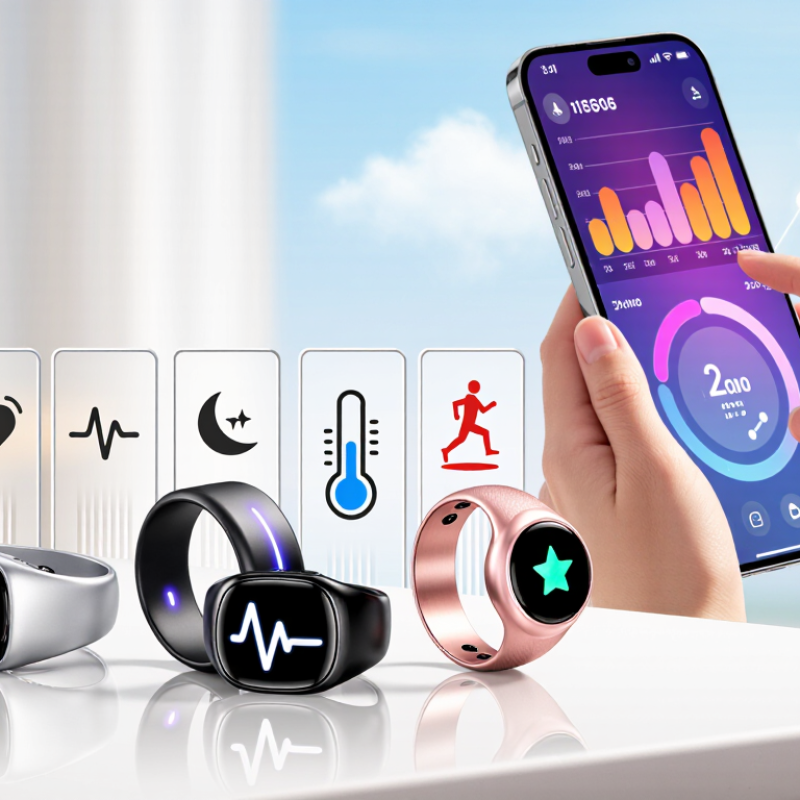
When choosing a Smart Health Ring, ask what it measures and how those measurements were validated. Most models track heart rate, resting heart rate, heart-rate variability, skin temperature, blood oxygen, movement, and sleep patterns. These signals show trends, not diagnoses. The American Academy of Sleep Medicine recommends at least seven hours of sleep for adults. However, a ring may mistake quiet wakefulness for sleep. That matters at 3 a.m., when a glowing score feels more certain than your fatigue.

Heart-rate data can help you observe exercise recovery and daily stress. The World Health Organization’s 2022 physical activity report estimates that 31% of adults worldwide are insufficiently active. A ring may show whether your movement supports the recommended 150–300 minutes of moderate activity weekly. Step counts still vary between algorithms. Temperature trends may reveal unusual changes, while oxygen readings can suffer from cold fingers, movement, or a loose fit. A 2024 review in npj Digital Medicine reported that wearable accuracy differs across metrics and real-life conditions. This technology remains imperfect.

Tips: Check validation studies, sensor details, battery life, data export, and privacy terms. Wear the ring consistently, especially overnight. Compare readings with symptoms and professional advice. Do not choose a device for one impressive score.

How to Choose the Best Health Smart Ring? Understanding What It Measures

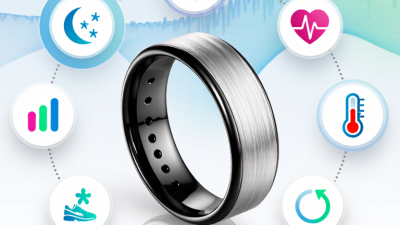
A health smart ring commonly combines optical heart-rate sensing, blood-oxygen estimation, skin-temperature sensing, and motion detection to estimate sleep duration and sleep stages. The chart shows an approximate sleep-stage distribution for a healthy adult night. Individual results can vary, and ring-based sleep stages are estimates rather than clinical diagnoses.

Heart rate
Tracks resting and overnight pulse patterns.
Blood oxygen
Estimates oxygen saturation trends during sleep.
Skin temperature
Monitors changes relative to the wearer’s baseline.
Movement
Helps estimate activity, awakenings, and sleep timing.

Identifying Your Personal Health and Fitness Goals

Choosing the best health smart ring starts with defining what you want to measure. A device cannot decide your priorities for you. If sleep is your concern, track bedtime consistency, nighttime movement, and morning readiness. If training matters, focus on heart rate, recovery trends, and activity duration. Goals should fit daily life, not an ideal routine. Be honest here. I once overvalued calorie estimates and ignored how tired I felt after normal workdays.

Write down one primary goal and two supporting questions. For example, “Can I sleep more regularly?” is more useful than “Improve health.” Look for sensors and reports that relate directly to that question. Sleep stages are estimates, not clinical diagnoses. Resting heart rate can reveal changes over time, but hydration, stress, illness, and medication may affect it. Check whether the ring measures continuously or only during selected periods. A comfortable fit also matters; a device left in a drawer produces no useful experience.

Consider how you will respond to the data. Will you adjust bedtime, reduce late exercise, or discuss persistent changes with a qualified clinician? Choose clear trends over impressive dashboards. Compare readings with your own baseline, rather than chasing another person’s numbers. Privacy deserves attention too; review data storage, sharing controls, and deletion options before purchase. My own mistake was checking scores too often, which created anxiety instead of better habits. Use the ring as one practical source of information, not the final authority on your body.

Comparing Sensors, Accuracy, and Health Tracking Features

Choosing the best Health Smart Ring starts with its sensors, not its appearance.

Photoplethysmography, or PPG, measures pulse through reflected light. Skin temperature sensors may reveal overnight changes, while accelerometers detect movement and rest.

Some models estimate blood oxygen, but readings can weaken with cold fingers, loose fit, or poor circulation.

Accuracy depends on testing conditions.

A 2020 meta-analysis in JMIR reported that wearable heart-rate errors were often within 5 beats per minute during rest. Movement reduced reliability. A 2024 review in Sensors also found wide variation across sleep, heart-rate, and activity measurements.

These figures are useful, but not absolute. A quiet bedroom is easier to measure than a sweaty workout.

Look for validation against clinical instruments, sample size, and testing environments. The American Academy of Sleep Medicine states that consumer sleep devices should not diagnose sleep disorders.

That warning matters.

A ring may record 7 hours in bed, yet confuse still wakefulness with sleep. Compare trends across several weeks, rather than trusting one unusual night.

Check whether the app explains missing data, sensor limitations, and confidence levels.

If temperature rises by 0.4°C, consider illness, room heat, menstrual-cycle changes, or measurement error.

Health data needs context.

Even professional testing has blind spots.

Evaluating Comfort, Fit, Materials, and Ring Size

A health smart ring should feel almost invisible during daily life. Comfort matters because sleep tracking requires overnight wear. Look for smooth inner edges and a balanced weight. A bulky ring may catch on clothing or feel warm after exercise. I once chose a tighter fit for better sensor contact. It became uncomfortable by morning.

Fit affects data quality. The ring should stay in place without squeezing the finger. Your finger size can change with heat, cold, exercise, and salty meals. Measure at different times, preferably in the evening. Try the ring on your non-dominant hand if frequent movement causes friction. It should rotate slightly, but not slide over the knuckle easily.

Materials deserve careful attention. Titanium is light and generally durable, while ceramic can feel smooth and resist visible scratches. Check the inner surface for coatings, seams, or exposed sensor parts. Sensitive skin may react to certain metals or adhesives. Stop wearing the ring if redness, swelling, or persistent itching appears. Keep the skin dry after washing, since trapped moisture can cause irritation. Sensor accuracy also depends on consistent contact, though a tighter ring is not always better. Health readings can be useful for personal trends, but they should not replace professional medical advice. My own sizing choice was not perfect, and that taught me to test comfort before trusting specifications.

Checking Battery Life, App Support, and Device Compatibility

When choosing a Smart Ring For Health, start with battery life rather than appearance. A ring that lasts five to seven days can support continuous sleep and activity tracking. Shorter battery life may create gaps in your records. That matters when you compare resting heart rate across several weeks. Check charging time, too. A compact charger that refills the ring in under two hours is easier to use during busy mornings. I once ignored this detail, and the ring stayed empty in a drawer.

App support deserves equal attention. The app should explain measurements clearly, not display colorful numbers without context. Look for sleep stages, heart-rate trends, temperature changes, and downloadable records. Reliable apps also show update dates and provide readable privacy settings. Review how data is stored and whether you can delete it. Clinical-looking charts do not automatically mean clinical accuracy. Treat wellness readings as useful signals, not diagnoses. If a value seems unusual, repeat the measurement and discuss persistent concerns with a qualified healthcare professional.

Device compatibility can decide whether the ring becomes part of your routine. Confirm support for your phone’s operating system before purchasing. Check Bluetooth requirements, tablet support, and whether the app needs a newer operating system. Some rings offer limited features when paired with certain devices. Test synchronization near your bedroom and inside a crowded gym. Connection failures are frustrating. Also check whether the app supports health-data sharing, since permissions can change after updates. A ring may be advanced, yet inconvenient if it cannot communicate with the devices you already use.

Reviewing Privacy, Costs, Subscriptions, and Long-Term Value

Choosing the best health smart ring requires more than comparing sleep scores. Smart Health Ring 2023 searches often focused on sensors, but long-term value depends on privacy and payment terms. The 2024 Deloitte Digital Consumer Trends report found that many users worry about personal-data security in connected devices. That concern is practical. A ring can record heart rate, movement, sleep patterns, and daily routines. Check whether data is encrypted, where it is stored, and whether deletion is genuinely available. A clear privacy policy matters more than a polished app.

Cost is easy to underestimate. Compare the purchase price with three years of service fees, replacement chargers, and battery decline. IDC’s Worldwide Quarterly Wearable Device Tracker reported continued growth in wearable shipments during 2024, yet growth does not guarantee better ownership value. Some services place advanced insights behind subscriptions. Others provide basic measurements without recurring fees. Read the cancellation rules before paying. I still find this confusing.

Tips: Export your data first. Test the app’s privacy controls. Calculate the three-year cost. Ask whether the ring remains useful without a subscription. Also, check return periods and warranty coverage. A comfortable ring that lasts four years may outperform a cheaper model requiring frequent replacement. However, health readings are not medical diagnoses. Treat unusual results as prompts for professional advice, not final answers. My own weak point is trusting attractive dashboards too quickly; simple, understandable data is often more valuable.

How to Choose the Best Health Smart Ring? — Reviewing Privacy, Costs, Subscriptions, and Long-Term Value
Anonymous Product Profile Typical Upfront Cost Subscription Requirement Typical Battery Life Core Health Measurements Privacy and Data Controls Data Export and Portability Durability and Water Protection Estimated Three-Year Ownership Cost Long-Term Value Assessment
Profile A: Subscription-Free Basic Ring Approximately $150–$250 No recurring fee for basic features Approximately 4–6 days Heart rate, resting heart rate, sleep duration, skin temperature trends, activity duration, and step estimates Usually offers account deletion and basic app permissions; review whether raw health data is stored in the cloud Often limited to summaries or manual reports; automatic export may not be available Commonly water-resistant for everyday use; verify the stated depth and time limits before swimming $150–$280, excluding optional accessories Strong value for buyers who want essential trends without a monthly subscription
Profile B: Advanced Sleep-Focused Ring Approximately $250–$350 About $5–$7 per month for detailed reports and historical insights Approximately 5–8 days Sleep stages, overnight heart rate, heart-rate variability trends, respiratory rate, skin temperature, and recovery indicators Check data-retention terms, third-party analytics, account-sharing rules, and whether health information is used for product improvement Frequently provides downloadable summaries; full raw-sensor access may be restricted Generally suitable for showering and swimming when the manufacturer specifies an appropriate water-resistance rating $430–$600, including an estimated 36 months of subscription fees Good value for users who consistently use sleep and recovery insights; less attractive if subscription features are rarely used
Profile C: Fitness and Recovery Ring Approximately $250–$400 $0–$8 per month, depending on advanced analytics and integrations Approximately 4–7 days Heart rate, workout heart rate, activity load, sleep, recovery trends, respiratory rate, and temperature variation Confirm whether fitness-platform connections are optional and whether connected services receive identifiable health data Usually supports integration with at least one major health or fitness platform; export depth varies by service Typically designed for continuous wear; inspect charging contacts, scratch resistance, and water-use limitations $250–$690, depending on subscription use Best suited to active users who will use training and recovery features several times per week
Profile D: Medical-Adjacent Wellness Ring Approximately $300–$450 Usually optional for basic tracking; premium interpretation may cost $3–$10 per month Approximately 3–6 days Pulse rate, sleep-related trends, temperature trends, blood-oxygen estimates on supported devices, and wellness summaries Look for clear separation between wellness information and medical diagnosis; review consent, retention, and deletion policies carefully May offer clinician-oriented reports, but access to continuous raw data is often limited Water resistance varies considerably; a higher rating does not mean the device is suitable for diving or medical use $300–$810, depending on premium interpretation services Potentially useful for structured wellness monitoring, but it should not replace regulated medical equipment or professional advice
Profile E: Ecosystem-Integrated Ring Approximately $300–$500 Basic tracking may be included; some advanced functions require $3–$10 per month Approximately 4–7 days Heart rate, sleep, activity, temperature trends, recovery metrics, and automatic synchronization with compatible devices Convenience may require broader permissions; check location access, device identifiers, advertising settings, and cross-service data sharing Usually offers the strongest interoperability when the user already owns compatible devices and health applications Commonly rated for everyday water exposure, but charging and cleaning instructions should be followed to preserve seals $300–$860, including possible subscription and ecosystem-related costs High value within the matching ecosystem; lower value if the user changes phones, platforms, or connected services frequently
Evaluation note: Three-year ownership estimates include the initial ring price and, where applicable, 36 months of subscription fees. They exclude taxes, shipping, replacement chargers, sizing kits, extended warranties, and replacement rings. Health smart rings provide wellness estimates and trends; they are not a substitute for diagnostic or emergency medical devices.

2024 IDC & Counterpoint Reports: Smartwatch Growth, Health Tracking, and BT Calling for Android/iOS Users

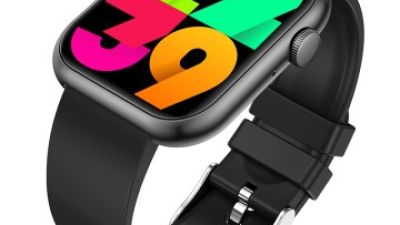
Recent 2024 market reports point to continued smartwatch growth, driven by users seeking convenient health tracking and stronger connections with their smartphones. Designed for both Android and iOS users, this innovative smartwatch supports Bluetooth calling through a built-in speaker, making it easy to receive or place calls without reaching for a phone. Users can also enjoy music on the go and adjust the watch settings to disable phone ringing or media sounds whenever they prefer a quieter experience.

Health-focused features help users stay aware of daily activity and personal wellness trends, while the upgraded AI voice assistant adds greater convenience to everyday tasks. With a simple tap, users can make calls, search for information, play music or videos, and access compatible apps through hands-free voice commands. This combination of health tracking, Bluetooth communication, and intelligent assistance reflects the evolving expectations of modern smartwatch users.

Manufactured with attention to quality and practical design, the smartwatch is suitable for suppliers looking to offer versatile wearable technology to today’s consumers. Its compatibility with major mobile platforms, customizable audio controls, and easy voice interaction make it a practical choice for work, exercise, travel, and daily routines.

FAQS

What does a health smart ring usually measure?

It commonly tracks heart rate, resting heart rate, heart-rate variability, temperature, oxygen, movement, and sleep patterns. These are trends, not diagnoses.

Can a smart ring accurately measure sleep?

It can estimate sleep duration and stages from movement and body signals. Quiet wakefulness may appear as sleep. Your tiredness still matters.

How can heart-rate data support daily wellness?

Heart-rate trends may show exercise recovery, resting changes, and possible stress patterns. Compare several weeks, not one unusual reading.

Why might oxygen readings become inaccurate?

Cold fingers, movement, or a loose fit can affect oxygen readings. Wear the ring securely. Repeat questionable measurements.

What battery life is practical for regular tracking?

Five to seven days can support continuous overnight tracking. Check charging time, too. A missing night creates a data gap.

What should a companion app provide?

Look for clear explanations, trend charts, downloadable records, and visible update dates. Colorful numbers can mislead. Simple data is often better.

How can I check device compatibility before buying?

Confirm phone operating-system support, Bluetooth requirements, tablet access, and health-data sharing. Test synchronization near your bedroom and inside a crowded gym.

What privacy details deserve careful attention?

Check encryption, storage location, deletion controls, and permission changes after updates. Read the privacy policy slowly. A polished dashboard proves little.

How should I calculate the long-term cost?

Add the purchase price, service fees, replacement chargers, and possible battery decline over three years. Check cancellation, returns, and warranty terms. I still find subscriptions confusing.

What should I do with an unusual health reading?

Repeat the measurement and compare it with your symptoms. Persistent concerns deserve qualified professional advice. Do not treat one score as a final answer.

Conclusion

Choosing the right Health Smart Ring starts with understanding what it can measure, such as heart rate, sleep patterns, activity levels, body temperature trends, and recovery indicators. Consider your personal health and fitness goals before comparing devices, since some users may prioritize sleep insights while others need exercise tracking or stress monitoring. Pay attention to sensor quality, measurement accuracy, and the range of health features available, while remembering that wearable data should support—not replace—professional medical advice.

Comfort and fit are equally important because a ring must be easy to wear throughout the day and night. Review the available sizes, materials, and design carefully. Battery life, app functionality, operating-system compatibility, data privacy, subscription requirements, and total cost should also influence your decision. The best choice is a reliable, comfortable, and practical Health Smart Ring that fits your lifestyle, protects your information, and provides meaningful long-term value.
Jackson

Jackson

Jackson is a dedicated marketing professional at Jiangxi Xiaozhi Health Technology Co., Ltd., where he leverages his extensive knowledge and expertise in the health technology sector to drive the company’s growth and outreach. With a profound understanding of the company’s product line and an......
Previous How to Choose the Best Smart Rings for Android?